

Vaso-occlusion most often occurs in the bones, back, chest, and extremities1,15

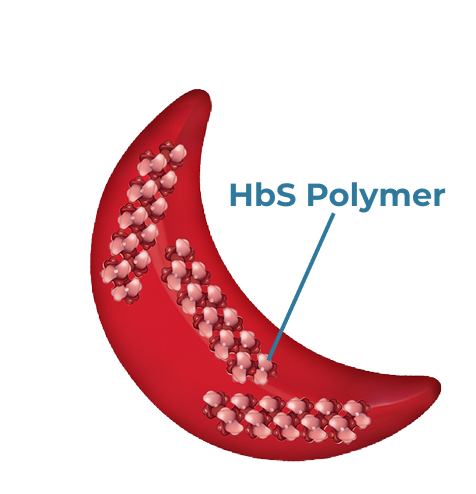
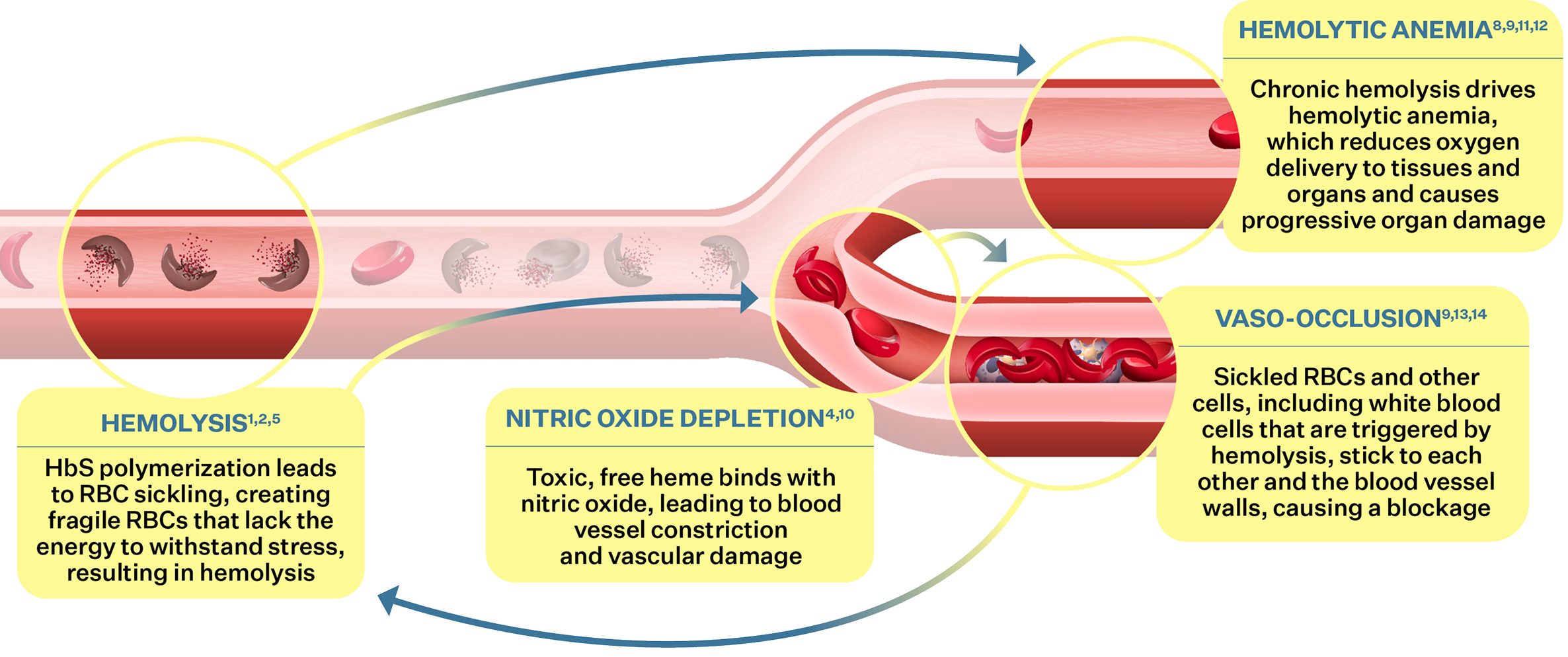
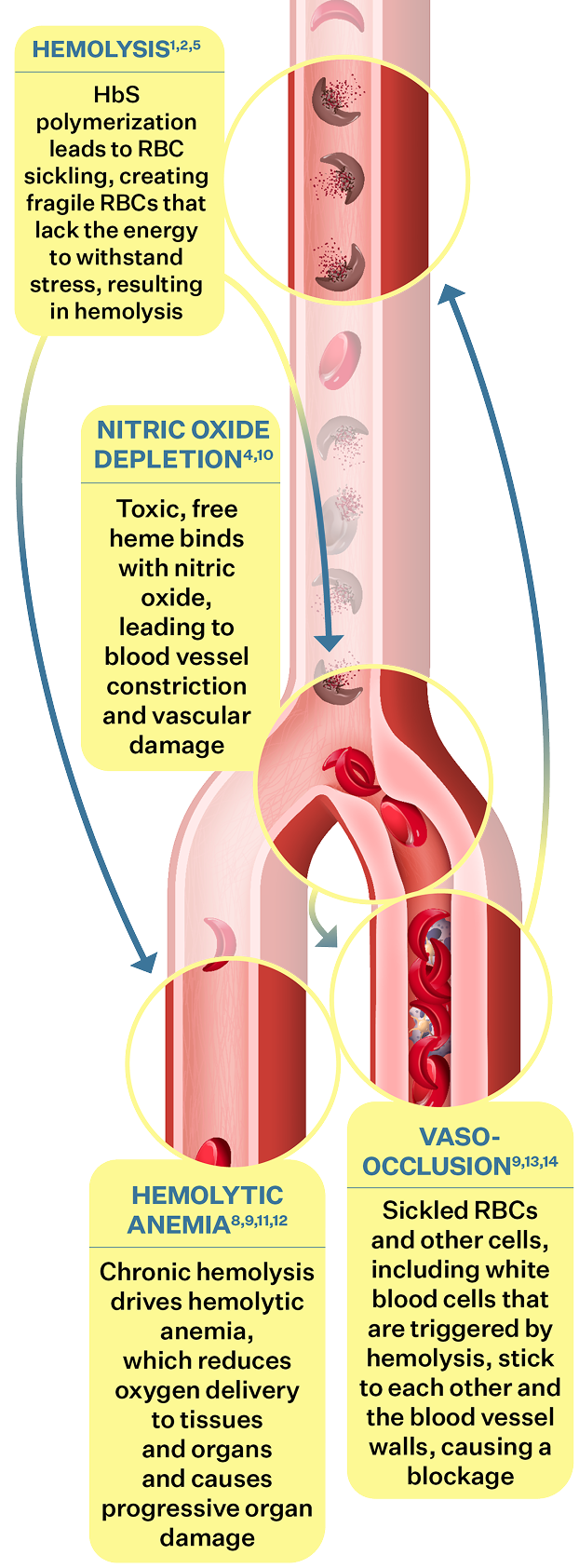
Deoxygenation of RBCs causes HbS polymerization, which results in a sickle-like shape1
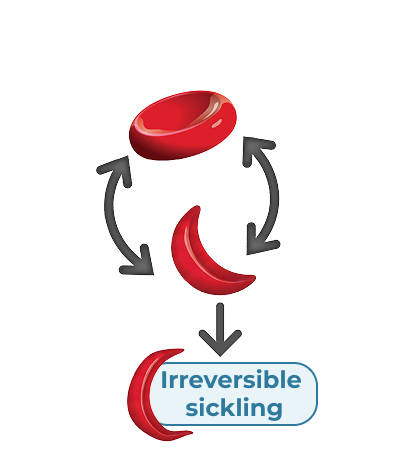
As RBCs deoxygenate and reoxygenate, they sickle and unsickle, leading to irreversible sickling2-4
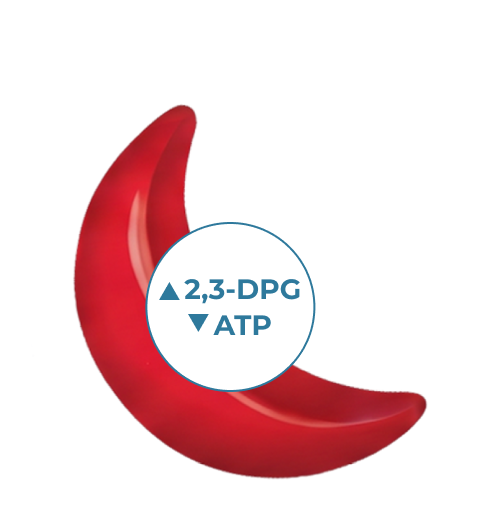
Sickling cycles and other stress contribute to metabolic imbalance in RBCs, which increases 2,3-DPG (increasing sickling) and reducing ATP2,5-7
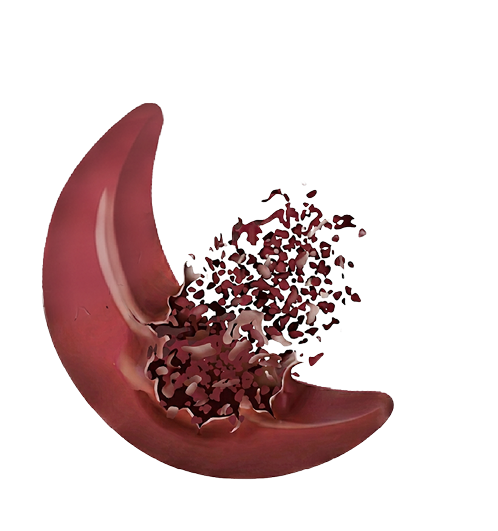
Due to metabolic imbalances, sickled RBCs are fragile and lack sufficient energy (ATP) to withstand stress, resulting in early hemolysis
Sickled RBCs live only 10-20 days (vs 120 days for healthy RBCs)2,5,8,9
2,3-DPG=2,3-diphosphoglycerate; ATP=adenosine triphosphate; HbS=sickle hemoglobin; RBC=red blood cell.
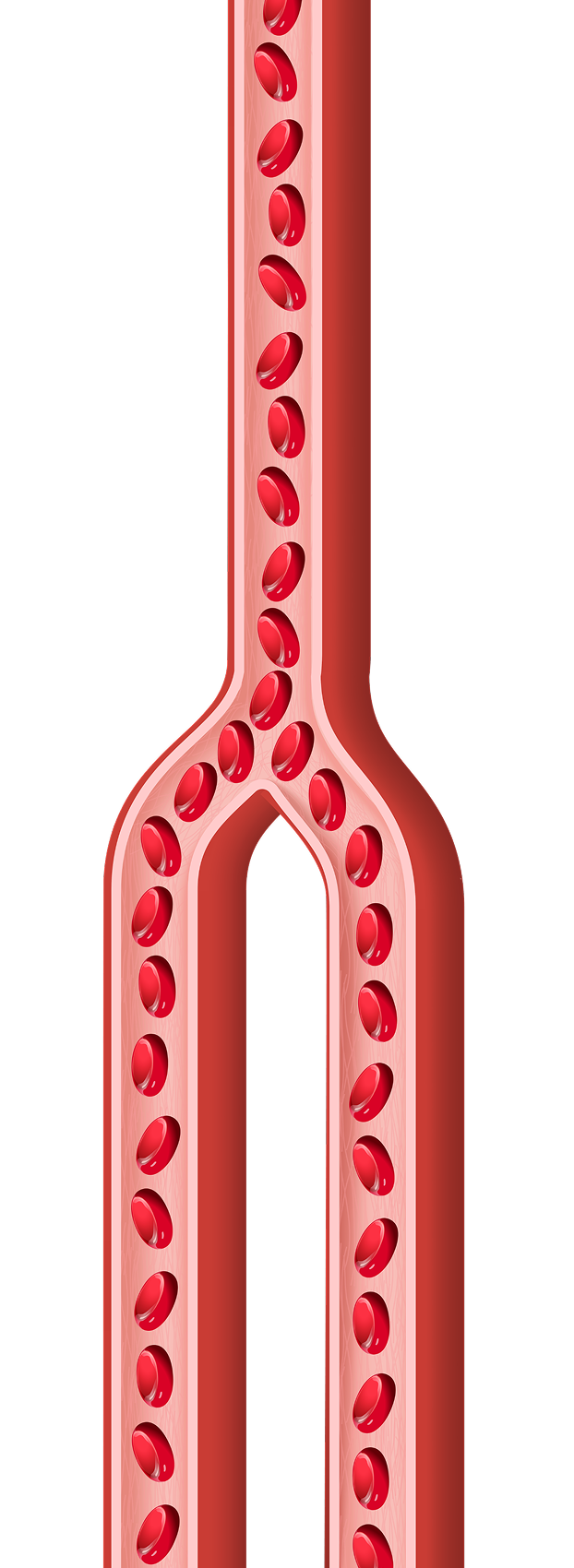
HEALTHY BLOOD VESSEL
SCD BLOOD VESSEL
SCD BLOOD VESSEL
HEALTHY BLOOD VESSEL
Hemolysis leads to anemia and contributes to vaso-occlusion, resulting in end-organ damage and early mortality.8,9
SCD=sickle cell disease.
Vaso-occlusion most often occurs in the bones, back, chest, and extremities1,15
Vaso-occlusion triggers can include cold temperature, dehydration, infection, and stress16
Vaso-occlusion can lead to sudden and severe pain (vaso-occlusive crisis), which is the most common complication associated with vaso-occlusion13,15
Vaso-occlusion leads to hypoxia, which can cause tissue injury and tissue death, and lead to organ damage (eg, acute chest syndrome in the lungs)17,18
Because of the severe pain associated with VOCs, they tend to be the most visible manifestation of the disease; however, there is also other damage occurring, contributing to a high total disease burden.13,19
*Tricuspid regurgitant jet velocity ≥2.5 meters per second on echocardiography is a surrogate marker for pulmonary hypertension in adults with SCD.20
VOC=vaso-occlusive crisis.
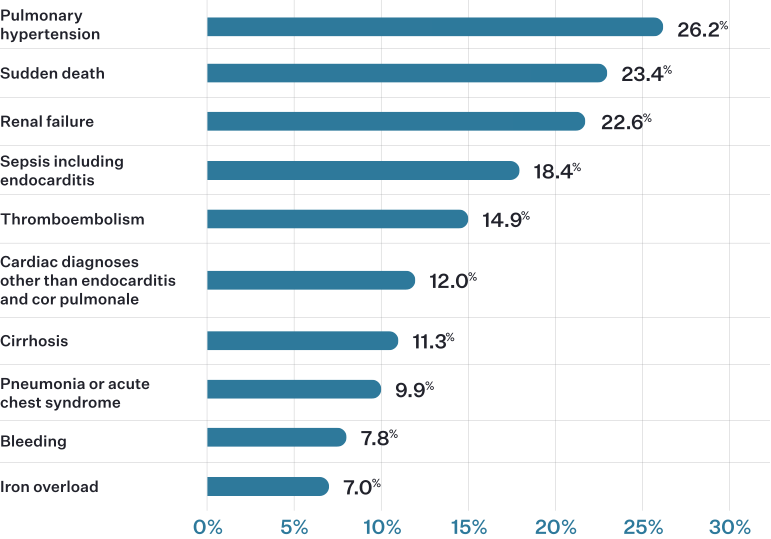
SD=standard deviation; SS phenotype=sickle cell disease.
References:
1. Kavanagh PL, Fasipe TA, Wun T. Sickle cell disease: a review. JAMA. 2022;328(1):57-68. doi:10.1001/jama.2022.10233 2. Gibson JS, Rees DC. Emerging drug targets for sickle cell disease: shedding light on new knowledge and advances at the molecular level. Expert Opin Ther Targets. 2023;27(2):133-149. doi:10.1080/14728222.2023.2179484 3. Ballas SK, Kuypers FA, Gordeuk VR, Hankins JS, Thompson AA, Vichinsky E. Time to rethink haemoglobin threshold guidelines in sickle cell disease. Br J Haematol. 2021;195(4):518-522. doi:10.1111/bjh.17578 4. Kato GJ, Piel FB, Reid CD, et al. Sickle cell disease. Nat Rev Dis Primers. 2018;4:18010. doi:10.1038/nrdp.2018.10 5. McMahon TJ, Darrow CC, Hoehn BA, Zhu H. Generation and export of red blood cell ATP in health and disease. Front Physiol. 2021;12:754638. doi:10.3389/fphys.2021.754638 6. Xu JZ, Vercellotti GM. Pyruvate kinase activators: targeting red cell metabolism in sickle cell disease. Hematology Am Soc Hematol Educ Program. 2023;2023(1):107-113. doi:10.1182/hematology.2023000467 7. Rab MAE, Bos J, van Oirschot BA, et al. Decreased activity and stability of pyruvate kinase in sickle cell disease: a novel target for mitapivat therapy. Blood. 2021;137(21):2997-3001. doi:10.1182/blood.2020008635 8. Xu JZ, Thein SL. Revisiting anemia in sickle cell disease and finding the balance with therapeutic approaches. Blood. 2022;139(20):3030-3039. doi:10.1182/blood.2021013873 9. Xue J, Li XA. Therapeutics for sickle cell disease intravascular hemolysis. Front Physiol. 2024;15:1474569. doi:10.3389/fphys.2024.1474569 10. Wang Q, Zennadi R. The role of RBC oxidative stress in sickle cell disease: from the molecular basis to pathologic implications. Antioxidants (Basel). 2021;10(10):1608. doi:10.3390/antiox10101608 11. Anemia. Mayo Clinic. Accessed June 25, 2026. https://www.mayoclinic.org/diseases-conditions/anemia/symptoms-causes/syc-20351360 12. Dimitrov JD, Roumenina LT, Perrella G, Rayes J. Basic mechanisms of hemolysis-associated thrombo-inflammation and immune dysregulation. Arterioscler Thromb Vasc Biol. 2023;43(8):1349-1361. doi:10.1161/ATVBAHA.123.318780 13. Zadeh FJ, Fateh A, Saffari H, et al. The vaso-occlusive pain crisis in sickle cell patients: a focus on pathogenesis. Curr Res Transl Med. 2025;73(3):103512. doi:10.1016/j.retram.2025.103512 14. Jang T, Poplawska M, Cimpeanu E, Mo G, Dutta D, Lim SH. Vaso-occlusive crisis in sickle cell disease: a vicious cycle of secondary events. J Transl Med. 2021;19(1):397. doi:10.1186/s12967-021-03074-z 15. Evidence-based management of sickle cell disease: expert panel report, 2014. National Institutes of Health. National Heart, Lung, and Blood Institute. Accessed July 7, 2026. http://www.nhlbi.nih.gov/health-pro/guidelines/sickle-cell-disease-guidelines 16. Mak V, Davies SC. The pulmonary physician in critical care. Illustrative case 6: acute chest syndrome of sickle cell anaemia. Thorax. 2003;58(8):726-728. doi:10.1136/thorax.58.8.726 17. Ballas SK, Gupta K, Adams-Graves P. Sickle cell pain: a critical reappraisal. Blood. 2012;120(18):3647-3656. doi:10.1182/blood-2012-04-383430 18. Friend A, Settelmeyer TP, Girzadas D. Acute Chest Syndrome. In: StatPearls. Treasure Island (FL): StatPearls Publishing; November 25, 2023. 19. van Tuijn CFJ, Schimmel M, van Beers EJ, Nur E, Biemond BJ. Prospective evaluation of chronic organ damage in adult sickle cell patients: A seven-year follow-up study. Am J Hematol. 2017;92(10):E584-E590. doi:10.1002/ajh.24855 20. Liem RI, Young LT, Thompson AA. Tricuspid regurgitant jet velocity is associated with hemolysis in children and young adults with sickle cell disease evaluated for pulmonary hypertension. Haematologica. 2007;92(11):1549-1552. doi:10.3324/haematol.11576s 21. Ershler WB, De Castro LM, Pakbaz Z, et al. Hemoglobin and end-organ damage in individuals with sickle cell disease. Curr Ther Res Clin Exp. 2023;98:100696. doi:10.1016/j.curtheres.2023.100696 22. Darbari DS, Kple-Faget P, Kwagyan J, Rana S, Gordeuk VR, Castro O. Circumstances of death in adult sickle cell disease patients. Am J Hematol. 2006;81(11):858-863. doi:10.1002/ajh.20685


