Contact us at 1-877-77-AGIOS (1-877-772-4467)
Elevated lactate dehydrogenase (LDH) levels have been associated with increased complications and mortality.
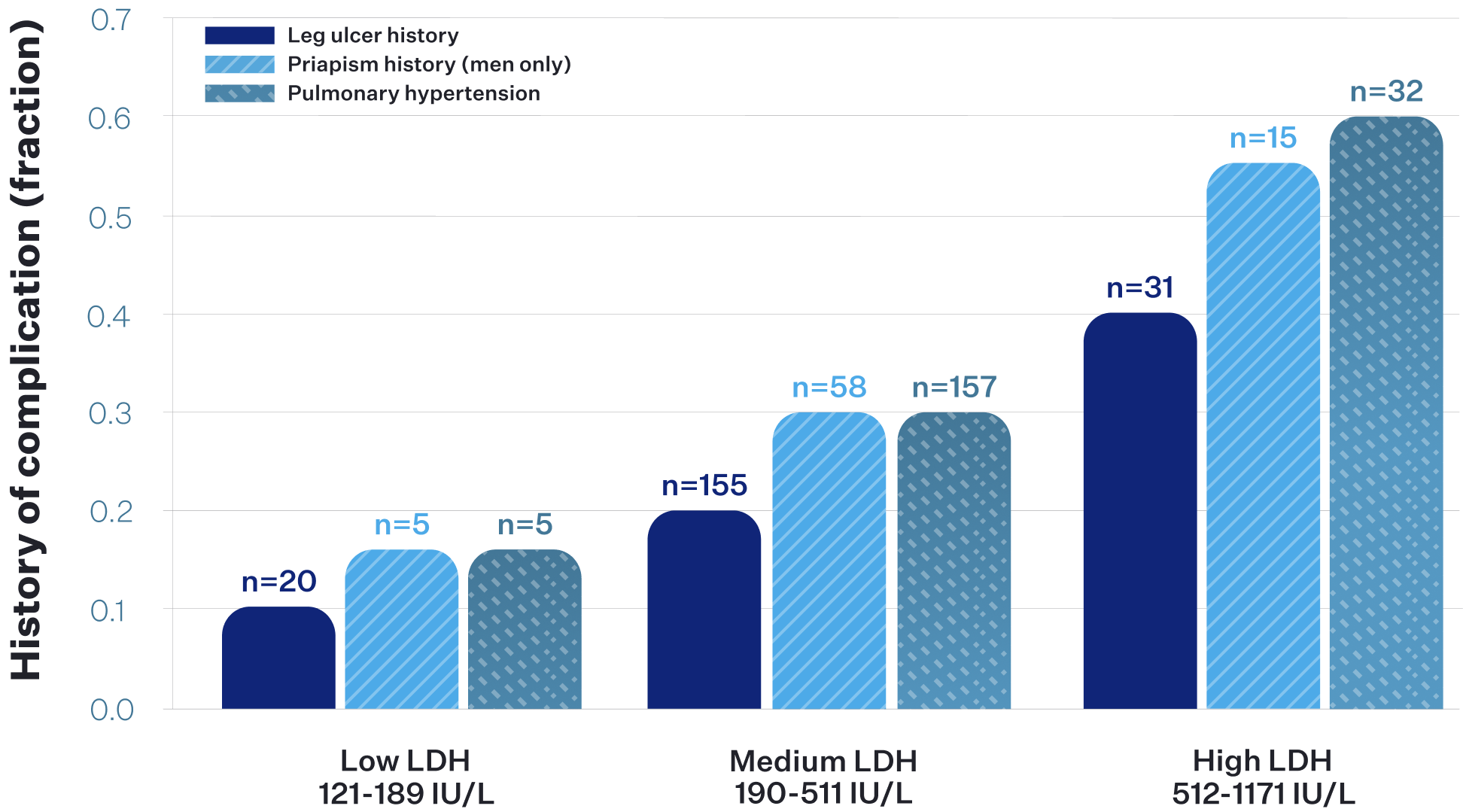
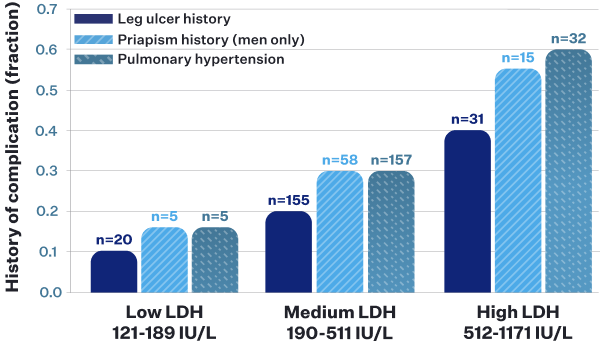
LDH=lactate dehydrogenase; SCD=sickle cell disease.
Jaundice impacts a large percentage of SCD patients. In a 2012 published cross-sectional survey of 100 SCD patients, 79% reported experiencing jaundice.6
Complications
Mortality risk
†Normal total bilirubin levels for adults range from 0.2–1.3 mg/dL.8
‡Elevated RVSP can be indicative of pulmonary hypertension, which represents one of the major vasculopathic complications of SCD.9,10
IQR=interquartile range; RVSP=right ventricular systolic pressure.
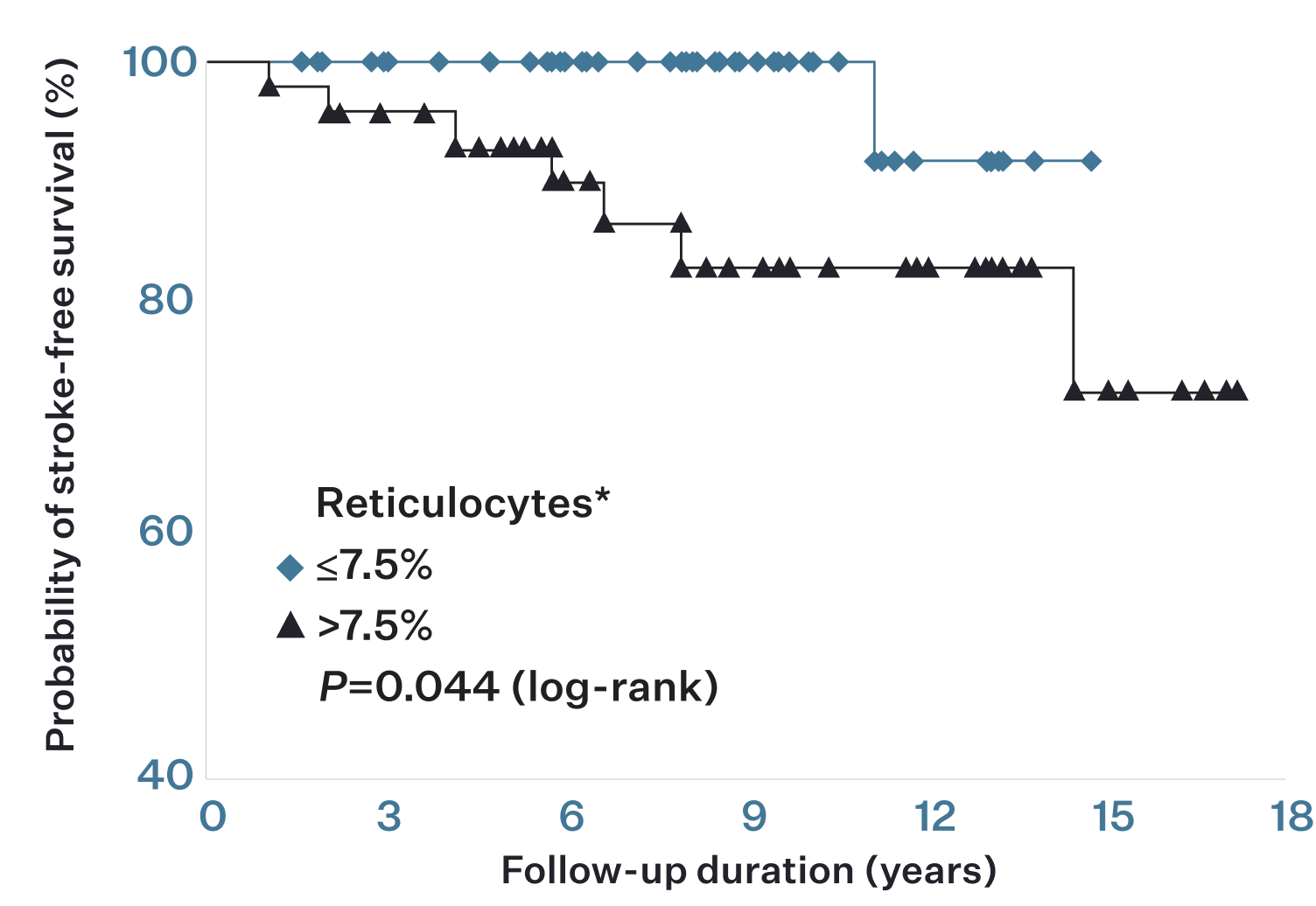
Figure adapted from de Oliveira Taques et al.
*A reticulocyte count is a percentage of the total number of red blood cells in a sample. Normal range is from 0.5% to 2.5% in adults and 2% to 6% in infants.14
All 3 markers of hemolysis (LDH, bilirubin, reticulocytes) have been linked to organ damage and/or mortality1,3,11
References:
1. Kato GJ, Steinberg MH, Gladwin MT. Intravascular hemolysis and the pathophysiology of sickle cell disease. J Clin Invest. 2017;127(3):750-760. doi:10.1172/JCI89741 2. Ataga KI, Gordeuk VR, Agodoa I, Colby JA, Gittings K, Allen IE. Low hemoglobin increases risk for cerebrovascular disease, kidney disease, pulmonary vasculopathy, and mortality in sickle cell disease: a systematic literature review and meta-analysis. PLoS One. 2020;15(4):e0229959. doi:10.1371/journal.pone.0229959 3. Kato GJ, McGowan V, Machado RF, et al. Lactate dehydrogenase as a biomarker of hemolysis-associated nitric oxide resistance, priapism, leg ulceration, pulmonary hypertension, and death in patients with sickle cell disease. Blood. 2006;107(6):2279-2285. doi:10.1182/blood-2005-06-2373 4. Dey T, Mukherjee A, Chakraborty S. A practical overview and reporting strategies for statistical analysis of survival studies. Chest. 2020;158(1S):S39-S48. doi:10.1016/j.chest.2020.03.015 5. Joseph A, Samant H. Hyperbilirubinemia. National Library of Medicine. National Institutes of Health. Accessed July 27, 2026. https://www.ncbi.nlm.nih.gov/books/NBK544252/ 6. Nero AC, McCavit TL, Adix LM, et al. Impact of jaundice on adults with sickle cell anemia. Blood. 2012;120(21):4753. doi:10.1182/blood.V120.21.4753.4753 7. Deeb M, Leung KK, Ward R, Feld JJ, Kuo KHM, Hirschfeld GM. Hepatobiliary complications in patients with sickle cell disease: a 30-year review of 1009 patients. Hepatol Commun. 2025;9(5):e0712. doi:10.1097/HC9.0000000000000712 8. Bilirubin test. Cleveland Clinic. Accessed July 1, 2026. https://my.clevelandclinic.org/health/diagnostics/17845-bilirubin 9. Kotrri G, Youngson E, Fine NM, et al. Right Ventricular Systolic Pressure Trajectory as a Predictor of Hospitalization and Mortality in Patients With Chronic Heart Failure. CJC Open. 2023;5(9):671-679. doi:10.1016/j.cjco.2023.05.011 10. Gladwin MT, Sachdev V. Cardiovascular abnormalities in sickle cell disease. J Am Coll Cardiol. 2012;59(13):1123-1133. doi:10.1016/j.jacc.2011.10.900 11. Belisàrio AR, Sales RR, Toledo NE, et al. Reticulocyte count is the most important predictor of acute cerebral ischemia and high-risk transcranial Doppler in a newborn cohort of 395 children with sickle cell anemia. Ann Hematol. 2016;95(11):1869-1880. doi:10.1007/s00277-016-2789-5 12. Xu JZ, Thein SL. Revisiting anemia in sickle cell disease and finding the balance with therapeutic approaches. Blood. 2022;139(20):3030-3039. doi:10.1182/blood.2021013873 13. de Oliveira Taques W, Bett GC, de Moraes BLB, Medeiros I, Fontes CJF, Godinho de Oliveira R. Factors associated with overt stroke in children and adolescents with sickle cell disease: a retrospective cohort study. Hemoglobin. 2024;48(1):39-46. doi:10.1080/03630269.2023.2301490 14. Reticulocyte count. Cleveland Clinic. Updated April 18, 2022. Accessed August 7, 2026. https://my.clevelandclinic.org/health/diagnostics/22787-reticulocyte-count