Damage in Sickle Cell Disease

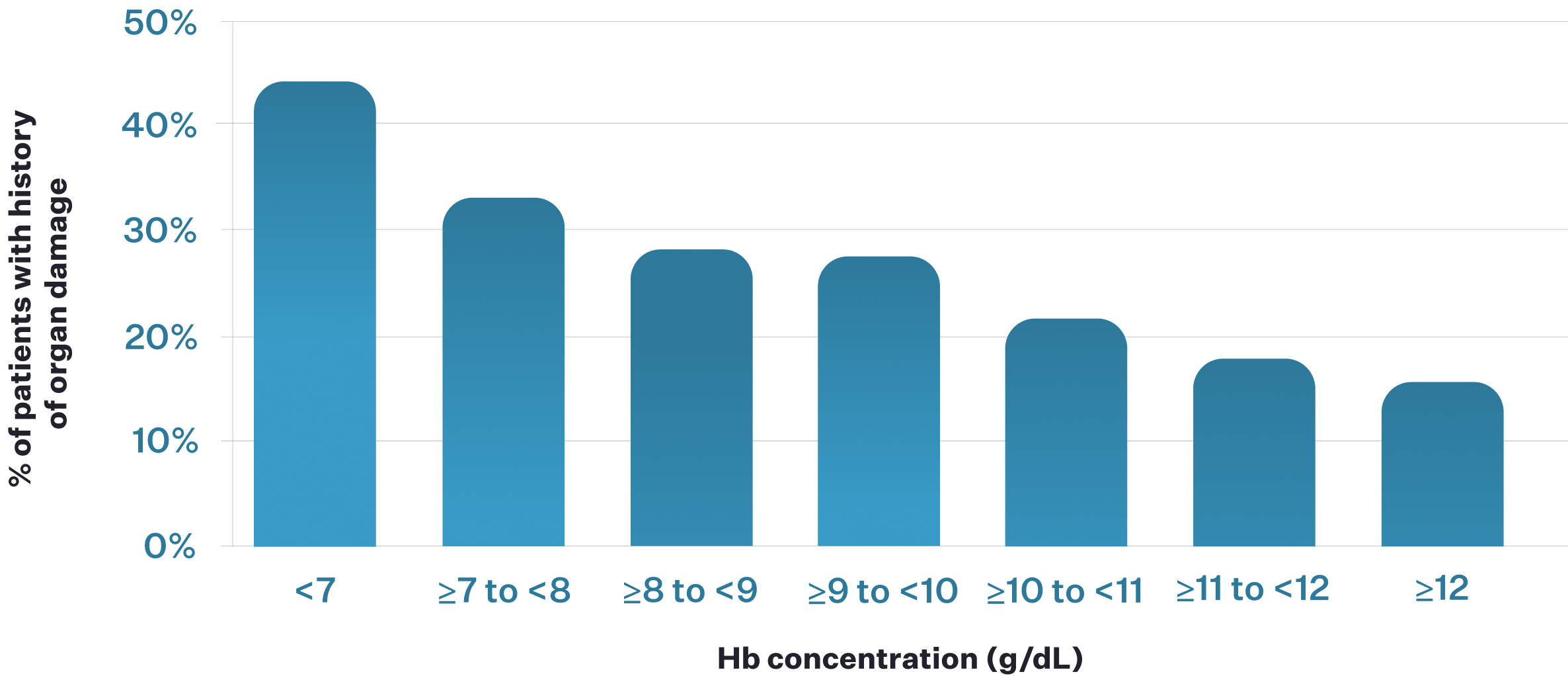
Lower hemoglobin levels are linked to higher rates of organ damage1

History of organ damage by hemoglobin levels
in patients with sickle cell disease1

Bar chart showing an association between history of organ damage in patients with sickle cell disease and hemoglobin levelsBar chart showing an association between history of organ damage in patients with sickle cell disease and hemoglobin levels

Hb=hemoglobin; SCD=sickle cell disease.
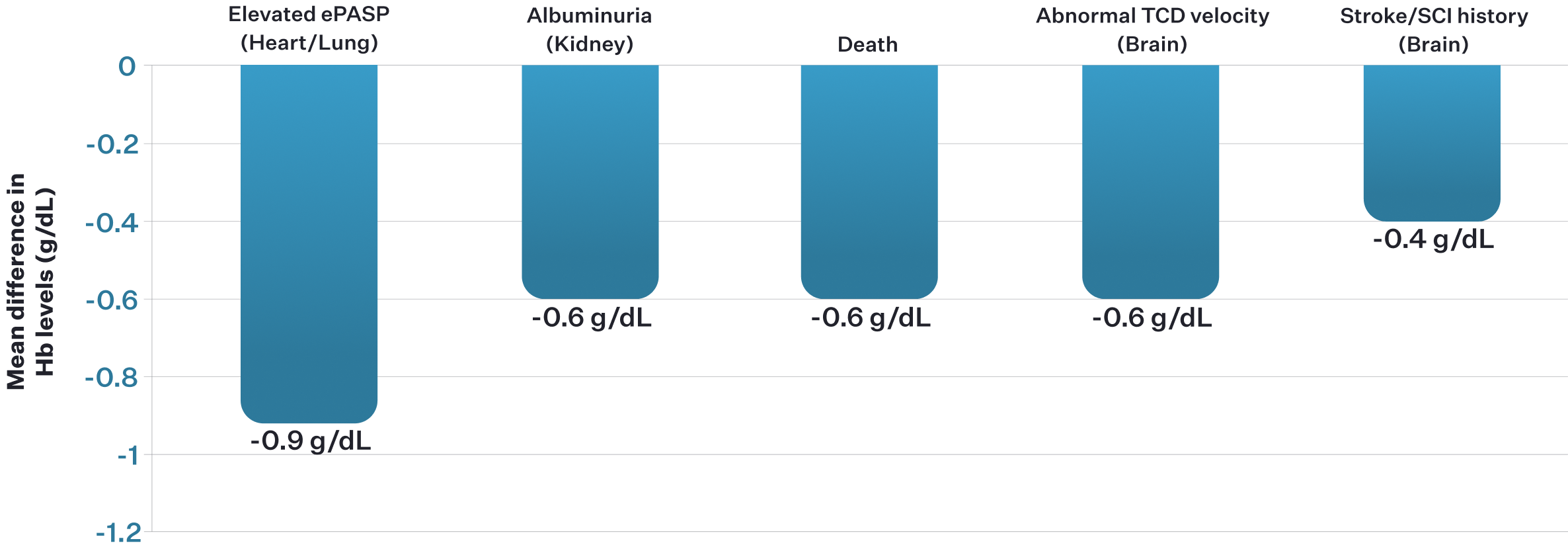
Even relatively modest decreases in Hb correspond with increased organ damage and mortality risk2

Mean Hb difference in patients
with complications vs those without2

Bar chart showing the mean difference in hemoglobin levels for patients with various complications vs those withoutBar chart showing the mean difference in hemoglobin levels for patients with various complications vs those without

ePASP=estimated pulmonary artery systolic pressure; Hb=hemoglobin; SCI=silent cerebral infarction; TCD=transcranial doppler ultrasound.
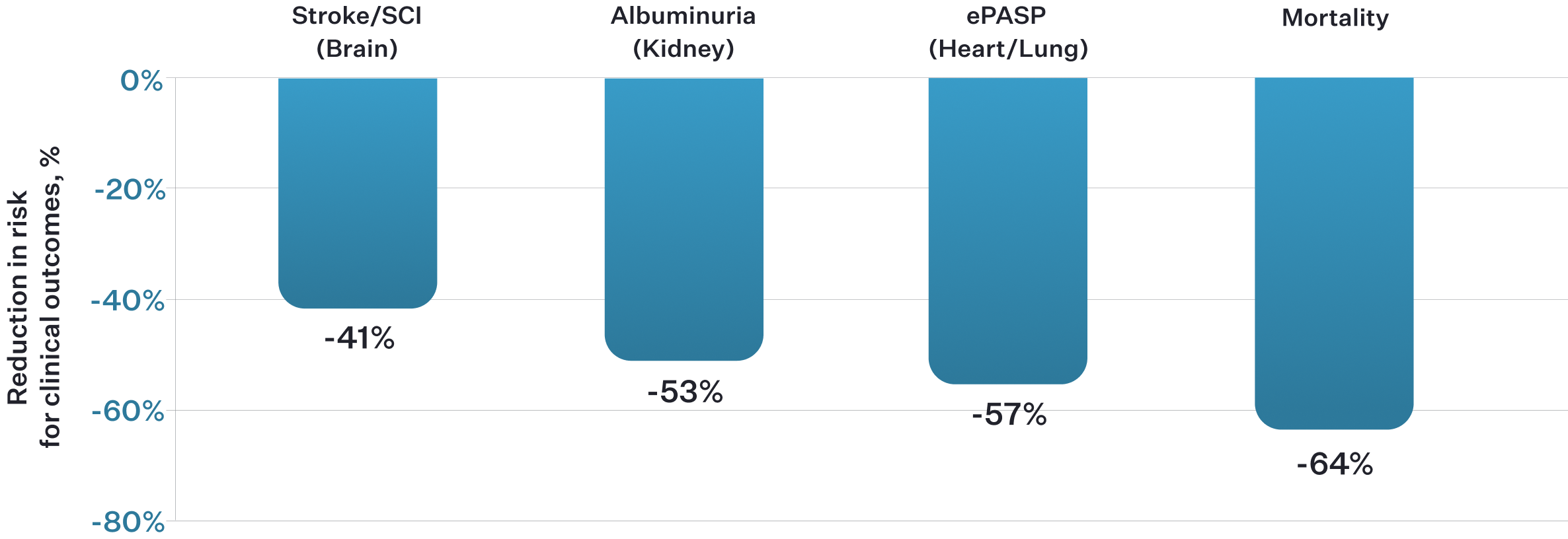
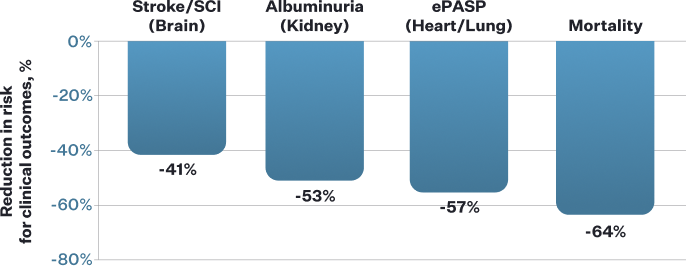
Increasing Hb by ≥1 g/dL is associated with lower risk of organ damage and mortality1,2

Meta-analyses modeled risk reduction in clinical
outcomes associated with ≥1 g/dL Hb increase2

Bar chart showing the modeled decrease in risk for clinical outcomes associated with >1 g/dL increase in hemoglobinBar chart showing the modeled decrease in risk for clinical outcomes associated with >1 g/dL increase in hemoglobin

Figure adapted from Ataga et al.

ePASP=estimated pulmonary artery systolic pressure; Hb=hemoglobin; SCI=silent cerebral infarction.

See the link between hemolysis markers and organ damage

Explore data

References:

1. Ershler WB, De Castro LM, Pakbaz Z, et al. Hemoglobin and end-organ damage in individuals with sickle cell disease. Curr Ther Res Clin Exp. 2023;98:100696. doi:10.1016/j.curtheres.2023.100696 2. Ataga KI, Gordeuk VR, Agodoa I, Colby JA, Gittings K, Allen IE. Low hemoglobin increases risk for cerebrovascular disease, kidney disease, pulmonary vasculopathy, and mortality in sickle cell disease: a systematic literature review and meta-analysis. PLoS One. 2020;15(4):e0229959. doi:10.1371/journal.pone.0229959