
Contact us at 1-877-77-AGIOS (1-877-772-4467)
It affects about 100,000 people in the US, primarily those of non-Hispanic Black or African-American (more than 90%) and Hispanic or Latino (3%-9%) descent. Other groups affected include those of Mediterranean, Middle Eastern, Caribbean, South American, and Indian descent.3
Regardless of genotype, SCD can result in both acute and chronic complications, leading to significantly reduced life expectancy:
~30 years earlier than that of the general population.1,6,7
A large, multicenter cohort (N=674) published in 2011 was used to determine the breakdown of genotypes among SCD patients of predominantly African origin in the Americas and the UK.5
HbSC=hemoglobin SC; HbSS=hemoglobin SS disease; HbSβ+=hemoglobin S β-plus; HbSβ0=hemoglobin S β-zero.
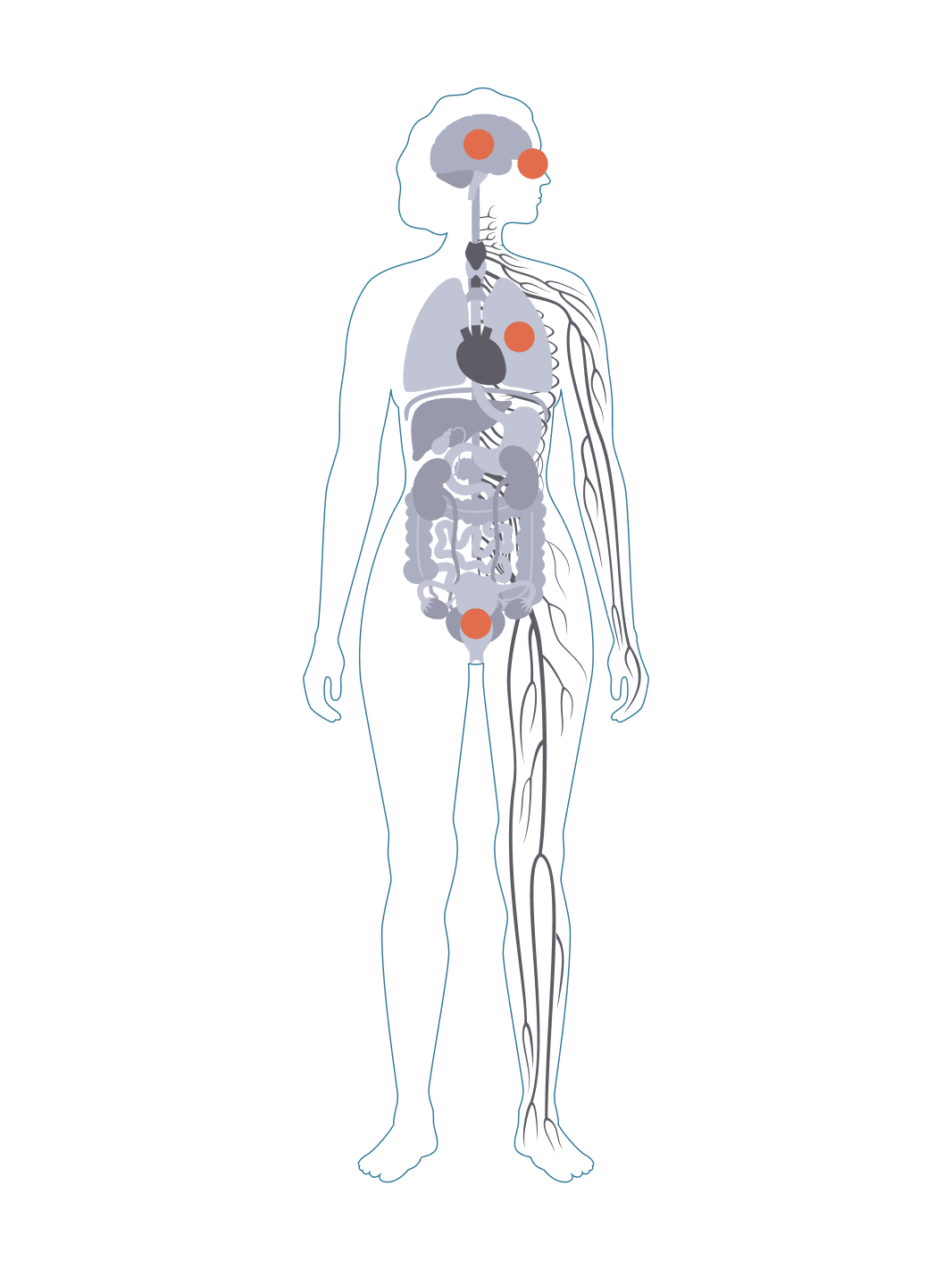
Brain
Stroke
Eye
Retinal detachment, retinal artery occlusion, vision loss
Lungs
Acute chest syndrome, pulmonary embolism, pneumonia
Genitourinary
Priapism
Pain
Pain crisis and dactylitis
Other
Infections, mobility issues
Brain
Silent cerebral infarction, cognitive impairment
Heart
Pulmonary hypertension, cardiomyopathy
Liver
Liver disease, cholelithiasis
Kidney
Chronic kidney disease, proteinuria, end-stage renal disease
Genitourinary
Erectile dysfunction
Bone-skin
Osteonecrosis, leg ulcers
Other
Jaundice, fatigue, mobility issues
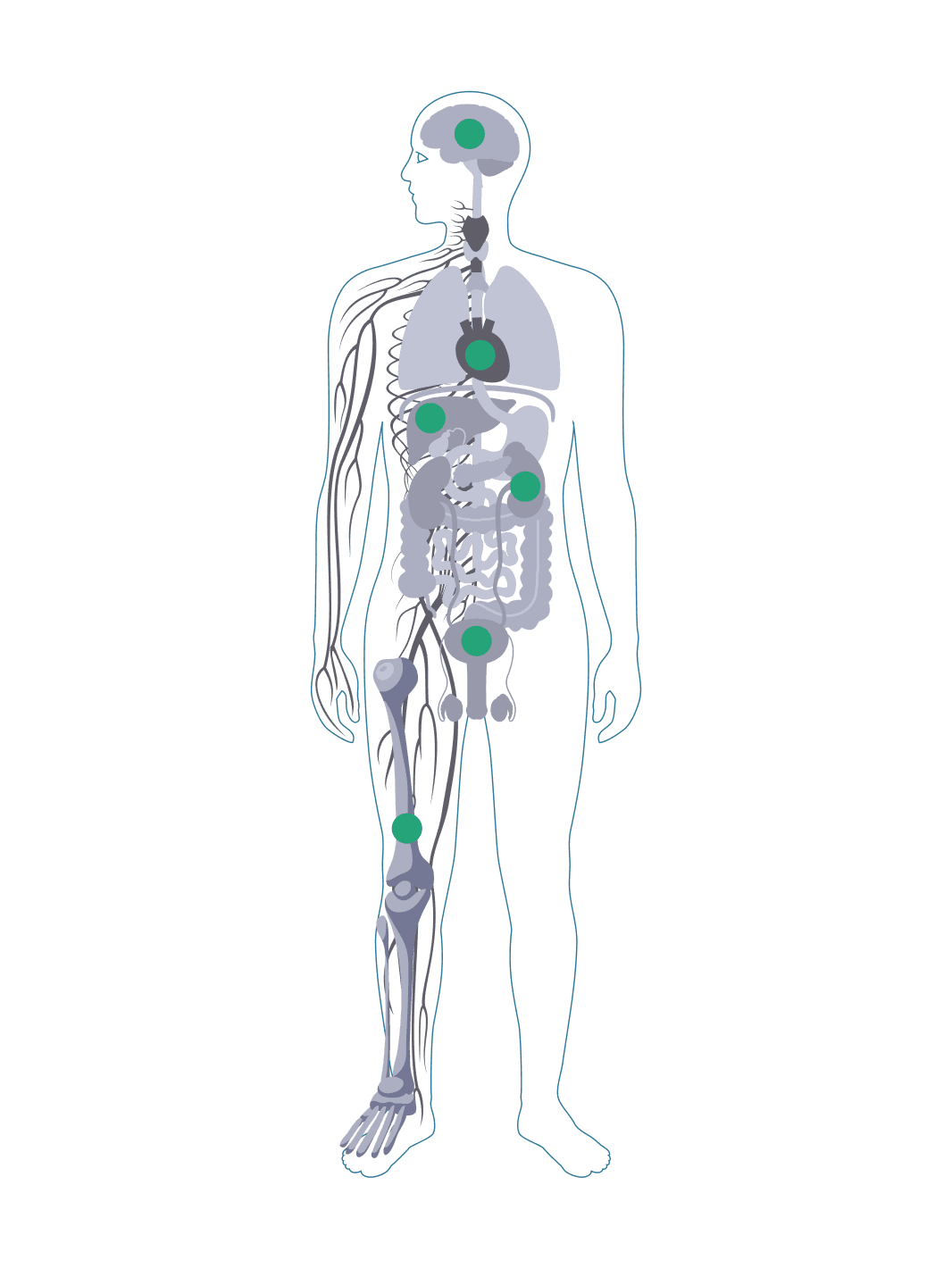
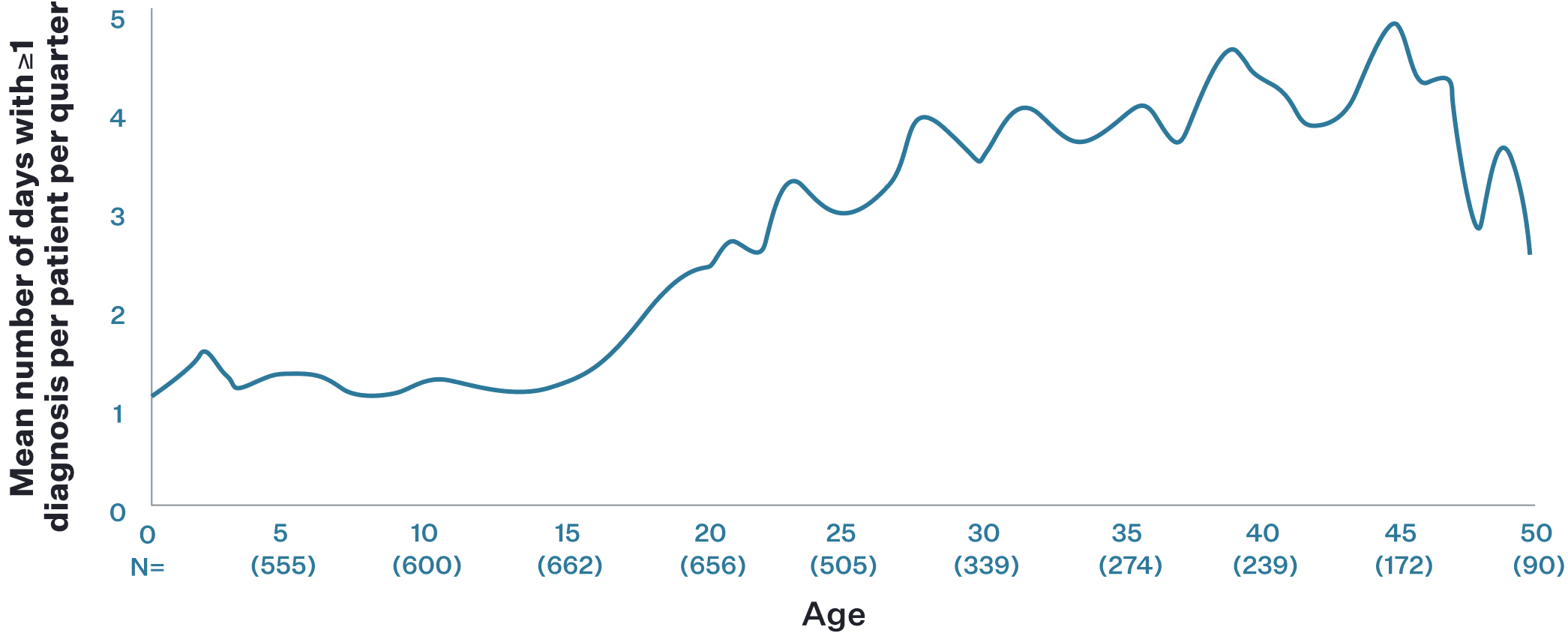
Figure adapted from Blinder et al.
Complications include: chronic obstructive pulmonary disease, pneumonia, asthma, pulmonary hypertension, acute chest syndrome, congestive heart failure, cardiomegaly, arrhythmia, cardiomyopathy, leg ulcers, and avascular necrosis.12
References:
1. Kavanagh PL, Fasipe TA, Wun T. Sickle cell disease: a review. JAMA. 2022;328(1):57-68. doi:10.1001/jama.2022.10233 2. Xu JZ, Thein SL. Revisiting anemia in sickle cell disease and finding the balance with therapeutic approaches. Blood. 2022;139(20):3030-3039. doi:10.1182/blood.2021013873 3. Data and statistics on sickle cell disease. Centers for Disease Control and Prevention. Updated May 15, 2024. Accessed June 25, 2026. https://www.cdc.gov/sickle-cell/data/index.html 4. Rees DC, Williams TN, Gladwin MT. Sickle-cell disease. Lancet. 2010;376(9757):2018-2031. doi:10.1016/S0140-6736(10)61029-X 5. Saraf SL, Molokie RE, Nouraie M, et al. Differences in the clinical and genotypic presentation of sickle cell disease around the world. Paediatr Respir Rev. 2014;15(1):4-12. doi:10.1016/j.prrv.2013.11.003 6. Telen MJ, Malik P, Vercellotti GM. Therapeutic strategies for sickle cell disease: towards a multi-agent approach. Nat Rev Drug Discov. 2019;18(2):139-158. doi:10.1038/s41573-018-0003-2 7. Kato GJ, Piel FB, Reid CD, et al. Sickle cell disease. Nat Rev Dis Primers. 2018;4:18010. doi:10.1038/nrdp.2018.10 8. Colombatti R, Jastaniah W, Makani J, Andemariam B. Sickle cell disease. Lancet. 2026;407(10533):1095-1111. doi:10.1016/S0140-6736(25)02278-0 9. Osunkwo I, Andemariam B, Minniti CP, et al. Impact of sickle cell disease on patients’ daily lives, symptoms reported, and disease management strategies: results from the international Sickle Cell World Assessment Survey (SWAY). Am J Hematol. 2021;96(4):404-417. doi:10.1002/ajh.26063 10. Gladwin MT. Cardiovascular complications and risk of death in sickle-cell disease. Lancet. 2016;387(10037):2565-2574. doi:10.1016/S0140-6736(16)00647-4 11. Ballas SK, Kuypers FA, Gordeuk VR, Hankins JS, Thompson AA, Vichinsky E. Time to rethink haemoglobin threshold guidelines in sickle cell disease. Br J Haematol. 2021;195(4):518-522. doi:10.1111/bjh.17578 12. Blinder MA, Vekeman F, Sasane M, Trahey A, Paley C, Duh MS. Age-related treatment patterns in sickle cell disease patients and the associated sickle cell complications and healthcare costs. Pediatr Blood Cancer. 2013;60(5):828-835. doi:10.1002/pbc.24459